Insights · 17 Sept 2026 · 4 min read
1.1 Million College Students Later, Here's What Tinder Actually Changed
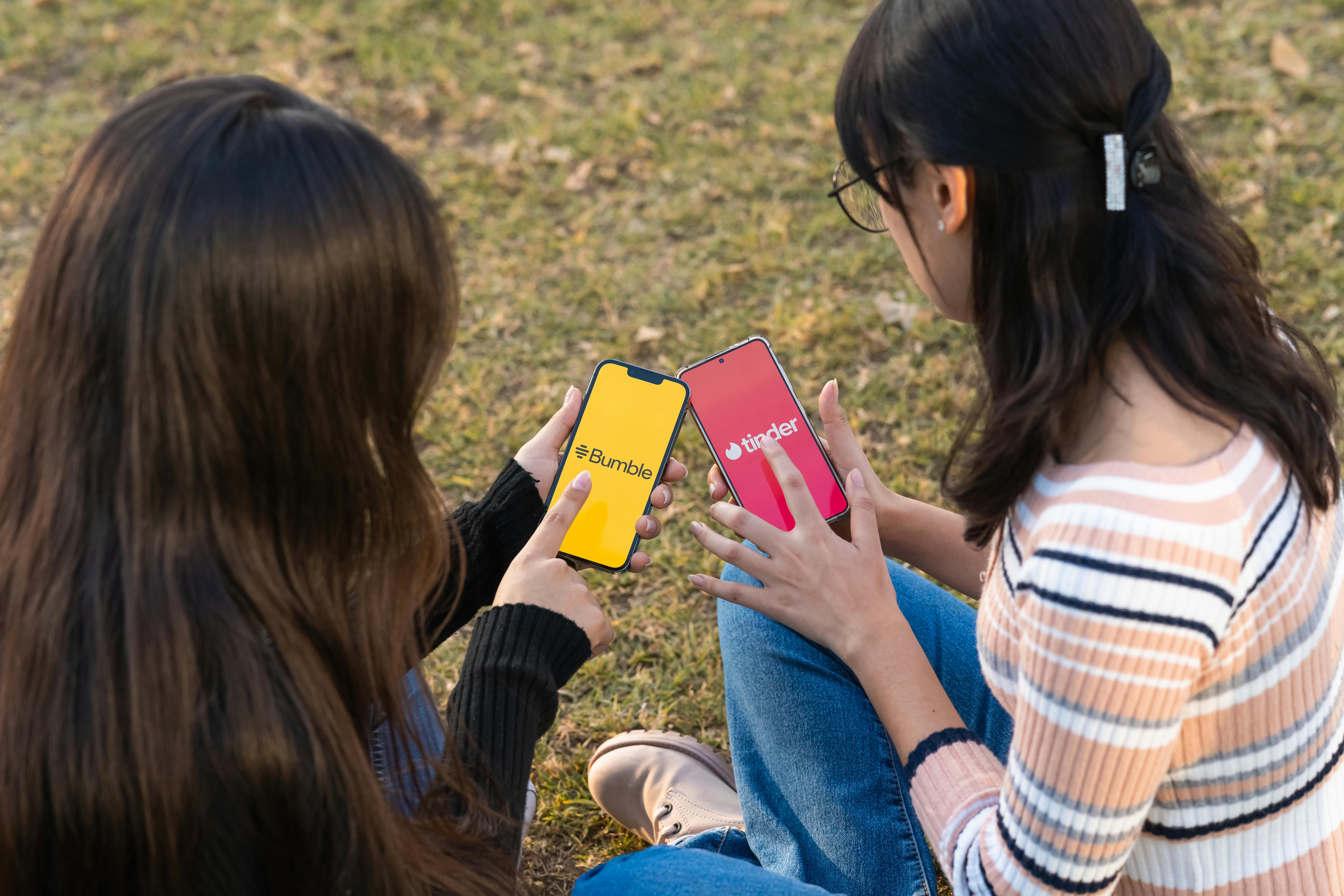 Photo: Julio Lopez, via Pexels
Ten years of campus health surveys just became a Tinder study
Economists don't usually get to run a controlled experiment on how a dating app changes a generation's sex life. But three researchers found the next best thing: paperwork.
A new paper in the American Economic Journal: Applied Economics, authored by Berkeren Büyükeren, Alexey Makarin, and Heyu Xiong, uses Tinder's own launch strategy against it. When the app went looking for its first users in 2013, it didn't blanket every campus at once. It targeted fraternities and sororities specifically, sending brand ambassadors to Greek parties to seed the app with attractive early adopters. That created something researchers love: a natural experiment. Greek-affiliated students got exposed to Tinder earlier and harder than everyone else on the same campus.
The researchers paired that rollout pattern with the National College Health Assessment, a survey that's been quietly tracking over 1.1 million U.S. college students since 2008. By comparing Greek-affiliated students to their non-affiliated classmates before and after 2013, they could isolate Tinder's effect from every other thing that happened to that generation of college kids. They also checked their timeline against 700,000-plus campus newspaper articles and Google search trends, so the "Tinder arrived here" moment isn't just a guess.
What actually changed, and what didn't
The clearest effect: more sex, not more relationships. Fraternity and sorority members reported more sexual partners and higher rates of recent sexual activity after 2013, compared to their unaffiliated peers. What didn't move was commitment. The study found no corresponding rise in students reporting a serious relationship or cohabitation. Tinder expanded the casual end of campus dating without pulling more people toward the long-term end.
The second finding is the one worth sitting with if you've ever felt like dating apps reward a small number of people. The researchers describe a "superstar effect," where a shrinking share of users captured a growing share of matches and attention, and the effect was sharpest among men. That lines up with something dating-app researchers have suspected for years from swipe-log data, but this paper gets there through a completely different method, national health surveys instead of app logs, and still lands on the same shape of inequality.
There's a genuinely uncomfortable finding too: reported sexual assault ticked up by roughly two percentage points off a baseline near 9%, and STI testing rose by more than a point. The authors aren't claiming Tinder caused assault directly; more sexual activity and more first encounters with strangers is a plausible mechanical channel, but the paper doesn't fully untangle that from reporting or testing behavior changing too.
The most counterintuitive result: average mental health did not get worse, and for women it appears to have modestly improved, with small declines in depression, self-harm, and disordered-eating measures. That cuts against a lot of the "dating apps are destroying Gen Z's mental health" narrative that shows up in casual conversation and opinion writing.
Read it as a shape, not a verdict
The authors are upfront about the limits. This is self-reported survey data, which always carries some response bias. And because Tinder adoption spread across entire campuses, not just Greek life, the comparison between affiliated and unaffiliated students almost certainly understates the app's true effect, since the "control group" was adopting the app too, just a bit later.
What the study is good for isn't a verdict on whether dating apps are good or bad. It's a reminder that "the app changed dating" can be true in very different ways for different people at once: more opportunity for some, more competition for others, more short-term activity without more long-term pairing.
That unevenness is also why aggregate stats about dating apps rarely tell you much about your own experience with one. A campus-wide average can hide a personal pattern, like a lot of matches but a low reply rate, or plenty of conversations that never turn into dates. If you want to see your own shape instead of the national one, RizzStats reads your Tinder or Hinge export and shows your actual match rate, reply rate, and activity over time, which is a much smaller dataset than 1.1 million students, but it's the one that's actually about you.