Insights · 13 Aug 2026 · 3 min read
What 4,500 Blind Dates Reveal About Video Dates vs. The Real Thing
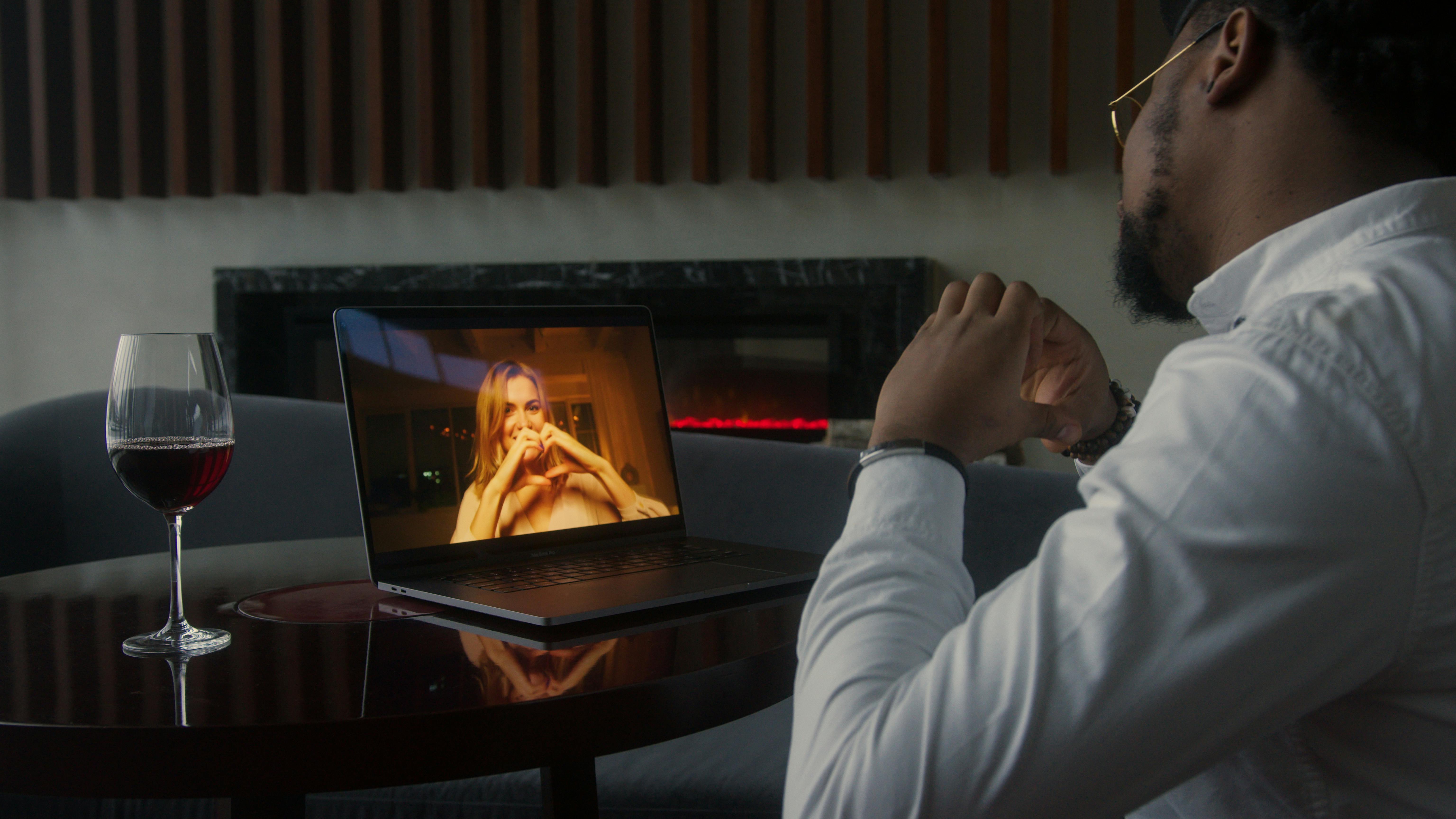 Photo: Artem Podrez, via Pexels
The Zoom date you talked yourself out of
You matched with someone, the conversation was good, and then they suggested a video call before meeting up. Some part of you deflated a little. A video date feels like the consolation prize, the thing you settle for when a real date isn't happening yet.
A new study says that instinct is wrong, and it has the receipts to prove it.
Published in January 2026 in Personality and Social Psychology Bulletin, the paper, "In-Person and Virtual Dates Are Comparable, But People Don't Know It" by Elina Moreno, Eli Finkel, Kellie Ammerman, and Paul Eastwick, does exactly what the title promises. It shows a gap between what people expect from video dates and what actually happens on them.
First, they asked people to guess
In the study's first part, 161 people imagined going on two blind dates: one dinner in person, one over Zoom. Across the board, people predicted the in-person date would win. They expected it to run longer, feel more enjoyable, end with more interest in a second date, and make their imaginary partner seem more attractive and more trustworthy. That's the assumption most of us are working from, even if we've never put it into words.
Then they checked against real dates
That's where the study gets interesting: the researchers didn't stop at hypotheticals. They pulled data from 4,542 actual blind dates arranged through a U.S. matchmaking service, generating over 9,000 individual date reports from both people involved.
The in-person dates did run longer, averaging about 2 hours and 8 minutes versus roughly 1 hour on Zoom. But once the researchers looked at how people actually rated the experience, attraction, personality impressions, interest in meeting again, the format barely mattered. The average effect size for the difference between video and in-person dates was d = 0.01, statistically indistinguishable from zero. When the researchers controlled for how long the dates lasted, Zoom dates actually edged out in-person ones slightly.
The bigger driver of how a date went wasn't the medium at all. Using a Social Relations Model, the researchers found that the specific pairing, the chemistry between those two particular people, accounted for more than 30% of the variance in how a date was rated. How likable or attractive someone was in general, across all their dates, mattered far less by comparison. In plain terms: whether a date works has much more to do with who you're sitting across from than whether there's a screen between you.
Why this matters if you're actually dating
This isn't a small, hypothetical-only finding, it's drawn from real matchmaking outcomes at meaningful scale. And it lines up with something researchers have flagged before: people are often bad at forecasting their own social experiences, especially ones loaded with anxiety like a first date.
If you've been putting off a video call because it feels like a downgrade, or agreeing to one reluctantly because "it's not a real date," the evidence suggests you're overweighting the format and underweighting the person. A video call is a legitimate way to figure out if there's something there, not a lesser substitute for the real thing.
That's worth remembering the next time you're deciding whether a match is worth a 45-minute train ride or a 20-minute video call first. If you're tracking your own dating patterns with RizzStats, the app can only tell you how many matches turn into conversations, not how those conversations turn into dates. This study is a decent reminder that the format of that first meeting is probably not the thing to agonize over. The two of you either click, or you don't.